L
O A D I N G
<

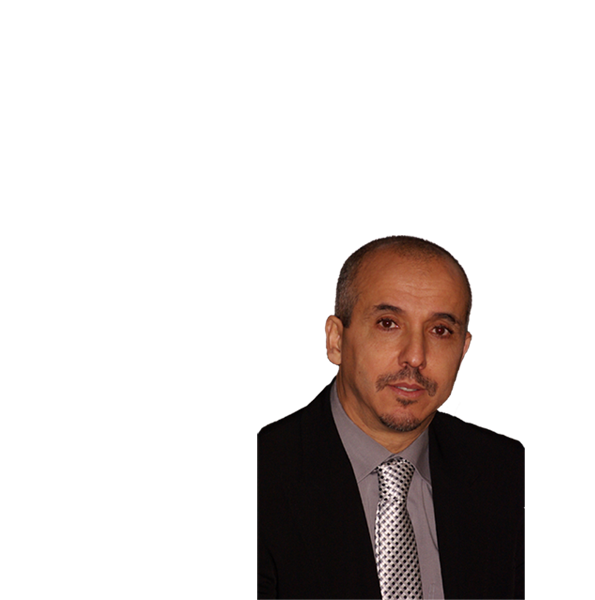
Amir HAJJAM EL HASSANI

Professeur des universités

I obtained my PhD in Computer Science at the University of Haute-Alsace (UHA) in 1990 and I am currently a Full Professor at the University of Technology of Belfort-Montbéliard (UTBM), where I head the computer science engineering program under apprenticeship status. My academic commitment also extends internationally as I am responsible for the Master's in Data Science, Cloud Infrastructures and Security and the Master's in AI & Health in Luxembourg, as well as the Master's in AI & Big Data in Togo. Alongside my teaching duties, I serve as Deputy Director of the SINERGIES Lab (under the supervision of UTBM, UMLP, and the University Hospital of Besançon) and I lead the Health Systems Organization research team. My research focuses on the convergence of artificial intelligence—specifically data mining and machine learning—operational research optimization, and digital health, with the constant goal of designing innovative decision-support tools.

A member of the editorial boards of several international journals and author of three books, I chaired the first eTelemed’09 conference before becoming its advisory chair for subsequent editions. I actively participate in the scientific outreach of our discipline by serving on the scientific committees of numerous international conferences such as AAIA, DBKD, IHAW, SSPHE, and IADIS e-Health. Finally, I regularly provide my expertise to national and international institutions, working with the National Research Agency (ANR) and ANRT in France, CNRST in Morocco, the Ministry of Health in Italy, and the Thematic Agency for Research in Health and Life Sciences (MESRS) in Algeria.


Convinced that science progresses beyond borders, I place international collaborations at the heart of my research approach, actively engaging in dynamic and structuring partnerships.

Collaborations

For several years, I have led numerous structured scientific collaborations with high-level laboratories and universities, both in France and internationally. These partnerships, consistently resulting in research publications, joint projects, or doctoral co-supervisions, are central to my research strategy. For example, my work has been conducted in partnership with prestigious institutions in China (Xidian, Hebei, Wuhan, Shanghai), Lebanon, Morocco, Canada, Mexico, Poland, and Togo, in addition to solid collaborations with IRCAD, CNRS, University of Lyon 1, University of Strasbourg, and UTBM. These cooperations enrich the scientific scope of our work, allow for the pooling of expertise, promote publication in Tier 1 (Q1) journals, and contribute directly to the training of young researchers. I am actively involved in their animation, consolidation, and development, convinced that science can only be built through openness, trust, and international cooperation.


Convinced that scientific rigor requires peer review, I strive to have my research recognized in the most selective international publications and congresses.

Publications

Among my more than 200 scientific publications, a selection of works published in leading journals (Q1 rank, with high impact factors) illustrates the scope and rigor of my research. These articles, produced in collaboration with research teams in China, Canada, Mexico, and France, address complex issues such as home healthcare optimization, AI-assisted medical diagnosis, and risk analysis in public health. Each publication is the result of in-depth collaborative work within the framework of research projects, doctoral co-supervisions, or long-term institutional partnerships. Subjecting my work to international scrutiny, having it validated by demanding peer review committees, and disseminating it in high-impact scientific journals has always been a priority and a lever for scientific progress.

Swarm Journal Logo

1. Swarm and Evolutionary Computation (2024)

Authors: W. LIU, M. DRIDI, A. M. FATHOLLAHI-FARD, A. HAJJAM EL Hassani

Title: A customized adaptive large neighborhood search algorithm for solving a multi-objective home health care problem in a pandemic environment

DOI: 10.1016/j.swevo.2024.101507

Impact Factor: 8.2 - Q1

Collaborations: Hebei University of Technology (China), Université du Québec (Canada)

The article presents a customized Adaptive Large Neighborhood Search (ALNS) algorithm to solve a multi-objective home healthcare problem in a pandemic context. This approach optimizes visit planning by considering specific constraints such as health risks and caregiver availability. The results show its effectiveness in improving solution quality and its adaptability to operational challenges during crisis periods.

Big Data Mining Logo

2. Big Data Mining and Analytics (2024)

Authors: G. WANG, L. LIU, F. LAURI, A. HAJJAM EL Hassani

Title: Multi-Scale DCNN with Dynamic Weight and Part Cross-Entropy Loss for Skin Lesion Diagnosis

DOI: 10.26599/BDMA.2024.9020038

Impact Factor: 7.7 - Q1

Collaboration: Xidian University (China)

This article proposes an innovative approach based on a multi-scale Deep Convolutional Neural Network (DCNN) for skin lesion diagnosis. The method integrates dynamic weighting and a part cross-entropy loss function to improve model accuracy. The results demonstrate superior performance in lesion classification, providing a promising tool for medical diagnostic assistance.

IJPR Logo

3. International Journal of Production Research (2024)

Authors: M. BOU SALEH, A. CHARIETE, L. SCHWARTZ, O. GRUNDER, A. HAJJAM EL HASSANI

Title: Reactive Tabu Search and Mixed-Integer Linear Programming...

DOI: 10.1080/00207543.2024.2391947

Impact Factor: 8.23 - Q1

The article proposes a hybrid approach combining Reactive Tabu Search and Mixed-Integer Linear Programming (MILP) to optimize assignment, scheduling, and routing in special education and home care services over several days. This method improves operational efficiency by dynamically adapting solutions to practical constraints, such as staff availability and beneficiary needs. The results demonstrate its superiority over traditional methods, offering a viable solution for managing these complex services.

JCM Logo

4. Journal of Clinical Medicine (2020)

Authors: K. GARATE ESCARMILLA, E. GARZA-PADILLA, A. CARVAJAL RIVERA, C. SALAS-CASTRO, E. ANDRES, A. HAJJAM EL HASSANI

Title: Cluster Analysis: A New Approach for Identification of Underlying Risk Factors...

DOI: 10.3390/jcm9072247

Impact Factor: 4.964 - Q1

Collaboration: MIT and Higher Education (Monterrey, Mexico)

This paper addresses thyroid pathology, which is reported in 5 to 10% of all pregnancies worldwide. The overall objective of this work was to determine the prevalence of hypothyroidism and risk factors during first-trimester screening in a sample of Mexican patients. Clustering proved to be a practical approach to study the heterogeneity of hypothyroidism risk factors among women in their first trimester of pregnancy in clinical studies.

Swarm Journal Logo

5. Swarm and Evolutionary Computation (2019)

Authors: J. DECERLE, O. GRUNDER, A. HAJJAM EL HASSANI, O. BARAKAT

Title: A hybrid memetic-ant colony optimization algorithm for the home health care problem...

DOI: 10.1016/j.swevo.2019.02.009

Impact Factor: 10.267 - Q1

This paper deals with the routing and scheduling of caregivers in a home healthcare problem. An original hybrid algorithm combining memetic optimization and ant colony optimization is suggested to solve this problem while balancing workload.


Convinced that scientific impact stems from collaboration, I am actively involved in national and international research projects that foster innovation and reach.

Research Projects and Industrial Contracts

For over two decades, I have developed research activities rooted in strong collaborative dynamics, combining large-scale competitive projects and targeted industrial partnerships. The funded research projects (Europe, ANR, FEDER, BPI, Interreg, etc.) that I have coordinated, with a total amount exceeding 14 million euros, have allowed me to structure multidisciplinary ecosystems involving universities, hospitals, and companies around high-stake issues such as AI in health, medical telemonitoring, and care pathway optimization. In parallel, the industrial contracts I have signed have played a key role in anchoring academic research in field realities, generating concrete deliverables, publishing with partners, and integrating young PhDs into projects with high innovation potential.

These two levers are inseparable: academic projects offer scientific depth and collective dynamics, while industrial collaborations ensure relevance, application, and impact. Their coherent articulation constitutes, in my view, an essential condition for producing research that is both demanding, useful, and sustainable, making UTBM a key player in technology transfer and regional innovation.


My teaching career reflects strong local involvement and a continuous international presence, serving demanding and forward-looking engineering and master's programs.

Educational Involvement

For over twenty years, I have been fully invested in knowledge transmission, relying on a demanding, evolving, and internationally-oriented pedagogy. My teaching, deployed at UTBM but also nationally and abroad, reflects my desire to train open-minded, agile engineers grounded in world realities. I pay particular attention to the evolution of pedagogical practices, integrating technological advances—notably digital tools, Artificial Intelligence, and generative AI—to meet the new needs of students and professional requirements, while also enriching learning, stimulating autonomy, and fostering a more accessible, effective, and sustainable dissemination of knowledge. The development of relevant training, anchored in current challenges, remains at the heart of my educational approach.

Local Level

Teaching is currently carried out in the Computer Science Department and the core curriculum of UTBM (Bachelor/Master level). They have evolved since my appointment and now mainly cover the following subjects: Modeling and Decision Support, Fundamentals of OOP, Algorithms and Programming, Operating Systems, Software Engineering.

International Level

I also regularly teach at UTSEUS Shanghai in China since 2007, at the University of Lomé in Togo since 2020, and have also taught at:

  • Hassan II University Casablanca in Morocco, in 2009
  • University of Sfax in Tunisia, in 2012
  • Antonine University Beirut in Lebanon, in 2017
  • School of Management Shanghai University in China, in 2017
  • Columbia University New York in the USA, in 2024
  • Cadi Ayyad University Marrakech in Morocco, in 2025

Transformation of Local Teaching

Upon taking office as Head of the Computer Science Engineering Apprenticeship Program in 2019, I launched a restructuring process by deploying a competency-based approach with the entire pedagogical team. This approach resulted in a new curriculum, which is constantly evolving and aligned with the socio-economic world's needs and orientations.


Partenaires